
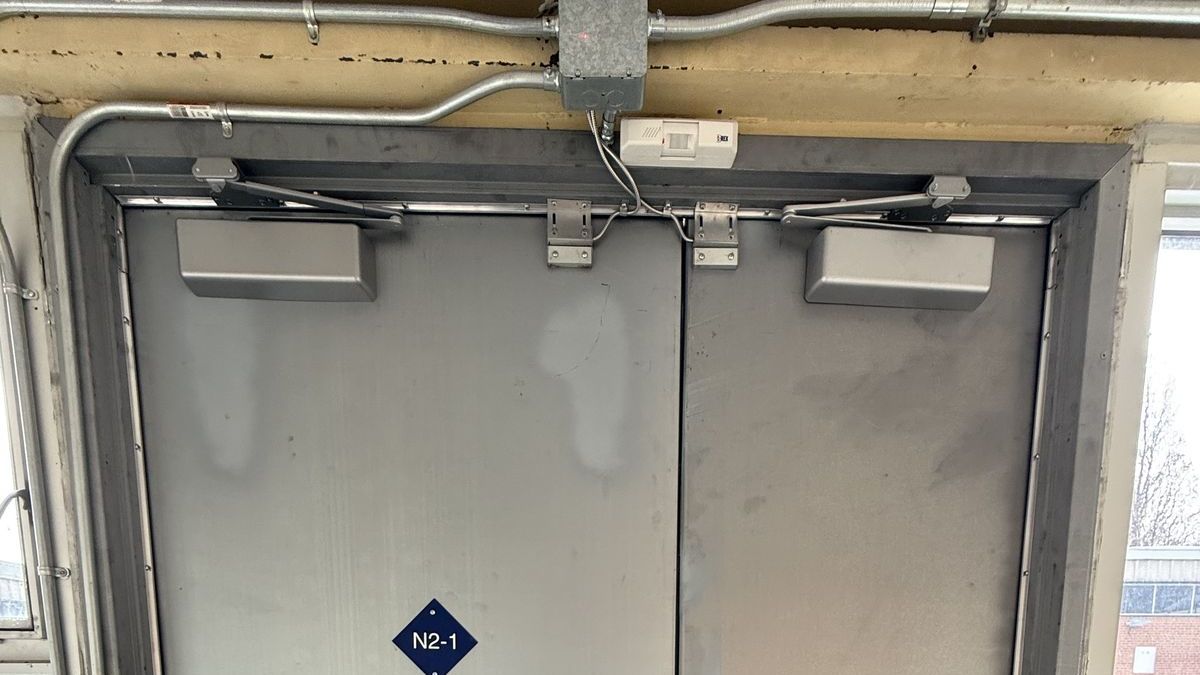
Door closers don’t get much attention until something goes wrong. Then the front door of your store slams on customers, the back door to the lane won’t close behind a delivery, or a fire door stays open when it should be shut. Most of these problems come from the closer at the top of the door, and many of them can be fixed with an adjustment instead of a new closer.
How a door closer works
A door closer is a spring and a cylinder of hydraulic fluid. Opening the door compresses the spring. As the door closes, the fluid passes through small valves that control how fast it swings. Most commercial closers have separate adjustment screws for:
- Sweep speed: how fast the door closes through most of its swing.
- Latch speed: the last few inches, where the door needs enough push to catch the latch.
- Backcheck: cushioning that stops the door from being thrown open into the wall.
Common door closer problems
The door slams shut
The sweep or latch speed is set too fast, or fluid has leaked out so nothing slows the door down. A slamming door is hard on the frame, the hinges and the glass, and it can catch someone’s hand.
The door closes too slowly or doesn’t latch
The valves are set too slow, the spring is too weak for the door, or something is rubbing. This one is common in winter: cold makes the hydraulic fluid thicker, so a closer that worked fine in summer can stop short of latching in January. An unlatched door means an unlocked door.
Oil is leaking from the closer
Oil on the closer, the door or the floor means the seals have failed. A leaking closer won’t hold its adjustment and can’t be refilled. It needs to be replaced.
The door is hard to open
The spring is set too strong for the door, or the arm is mounted in the wrong position. A heavy door is a real problem for customers with strollers, walkers or wheelchairs. If people struggle with it, an automatic door opener may be the better fix.
The arm is loose, bent or broken
Closer arms take a beating when a door is kicked open, caught by the wind, or propped open with a wedge. A loose or bent arm makes the door swing unevenly and wears out the closer.
Adjust, repair or replace?
- Adjust when the door simply closes too fast or too slowly and the closer isn’t leaking.
- Repair the arm, brackets or mounting screws when they’re loose or bent.
- Replace the closer when it leaks oil, the body is cracked, or it’s too small for the door. A closer that’s undersized for a heavy or wide door wears out quickly.
A word of warning if you try adjusting it yourself: turn the valve screws in small steps. On many closers, backing a valve screw out too far lets the fluid escape, and then the closer has to be replaced.
Fire doors and exit doors
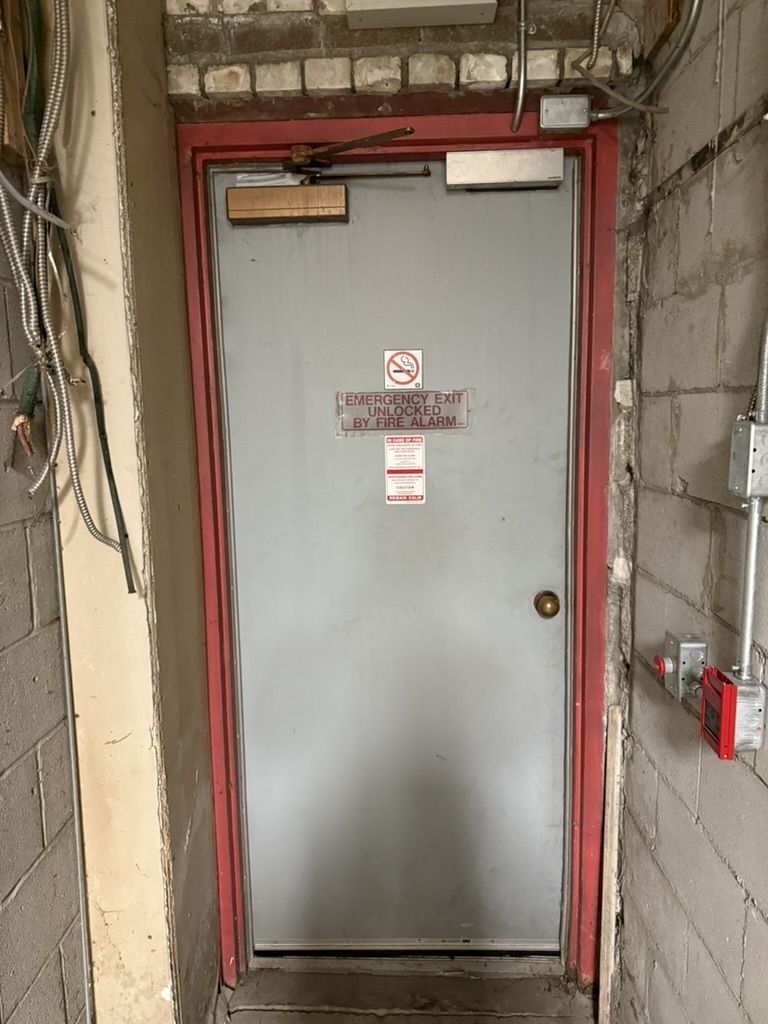
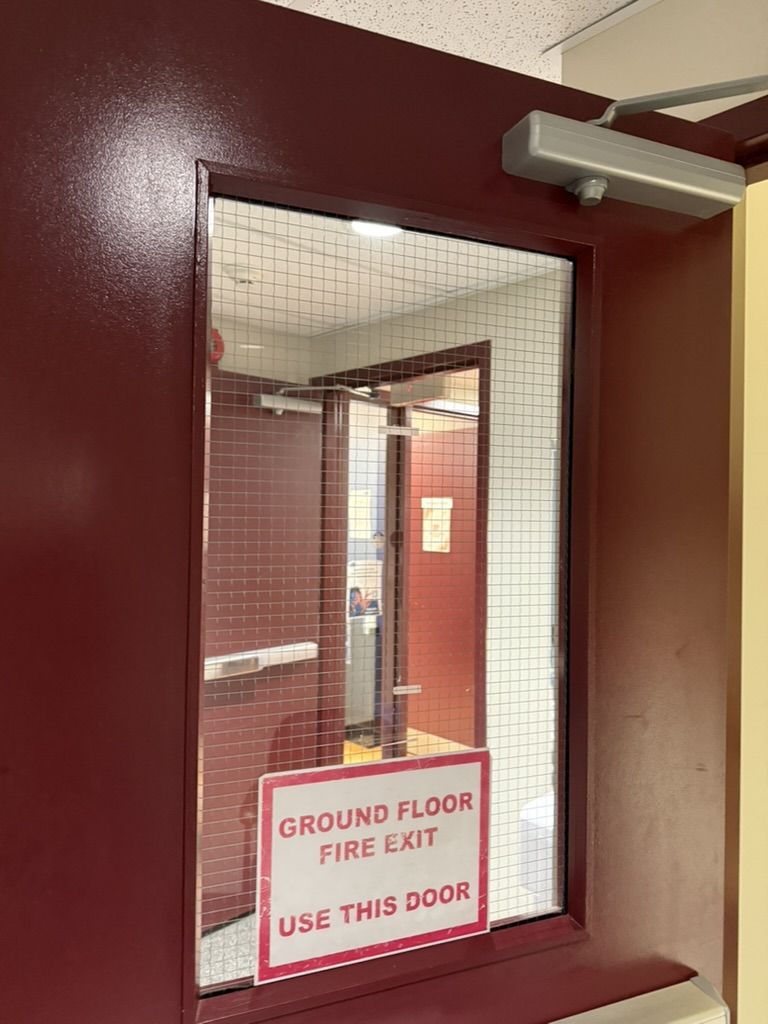
Fire-rated doors in stairwells, corridors and service areas have to close and latch on their own. If the closer on a fire door is leaking, disconnected, or set so slowly that the door doesn’t latch, have it fixed quickly. Your building manager or fire inspector can confirm the requirements for your building.
When the problem isn’t the closer
If the door drags on the floor, sags, or the gap along the top is uneven, the hinges or pivots are probably worn. A new closer won’t fix a door that’s hanging badly. See commercial hinge repair and commercial door repair.
Door closer repair in Toronto and the GTA
We adjust, repair and replace door closers on storefronts, offices, warehouses and plazas across the GTA, on aluminium, glass, steel and wood doors. Service call + 1st hour of labour starts from $175, and a closer adjustment often fits within that hour. New closers and parts are extra. See also storefront door repair and door hardware repair.
Frequently asked questions
Why is my commercial door slamming?
The closer is set too fast or has lost its hydraulic fluid. If there’s no oil leak, the speed can usually be adjusted. If it’s leaking, the closer needs to be replaced.
Why does my door close more slowly in winter?
Cold makes the fluid inside the closer thicker, so the door slows down and may not latch. A technician can readjust the closer for the season or replace it with one that handles temperature changes better.
Can a leaking door closer be fixed?
Usually not. Once oil is leaking, the seals have failed and the closer won’t hold its adjustment. Replacing it is the reliable fix.
How much does door closer repair cost?
At Go Locksmith And Doors, the service call + 1st hour of labour starts from $175. A new closer, arm or bracket is extra.
Door closer acting up? Call 647-955-6055, 24/7. Service call + 1st hour of labour starts from $175.
