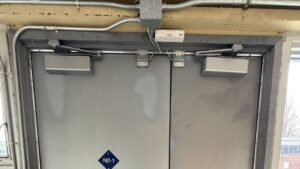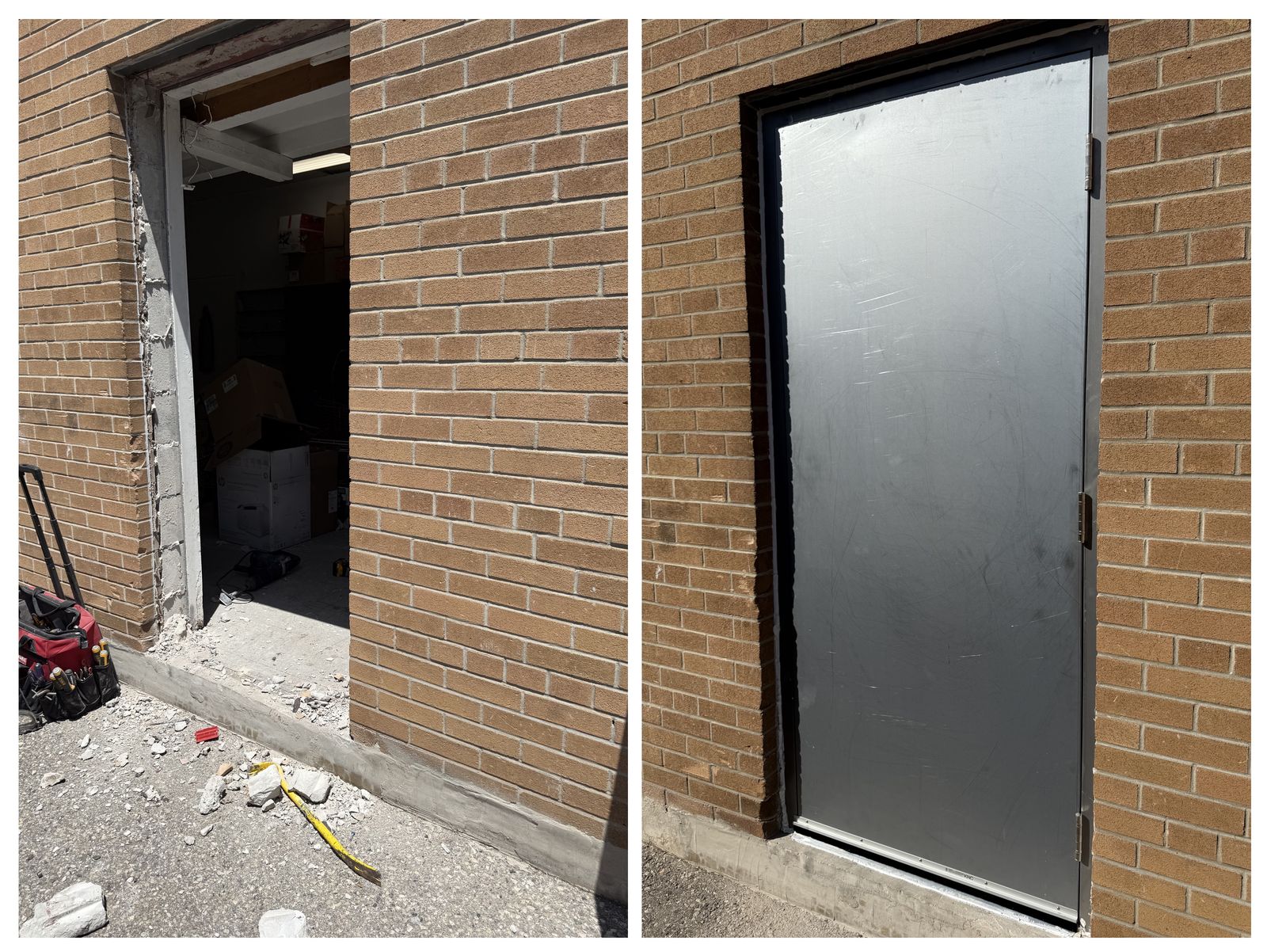
If your front door locked fine in September and now you have to lift, push or slam it before the deadbolt will turn, you’re not imagining it. Every winter we get calls from across the GTA about doors that suddenly won’t latch or lock. Most of the time the lock isn’t broken. The door has moved.
Why doors change in the cold
- Wood and fibreglass doors shrink and swell with temperature and humidity. A shift of only a few millimetres is enough to stop the latch from catching the strike plate.
- Frames move too. A steel door doesn’t swell, but the frame around it can shift as the house settles and the ground freezes and thaws.
- Weatherstripping stiffens in the cold and pushes back against the door, so it doesn’t close all the way.
- Ice and salt on the threshold stop the bottom of the door from closing fully.
- Grease inside the lock thickens, so the deadbolt feels heavy even when everything lines up.
Is it the door or the lock?
The quickest test: open the door and turn the deadbolt. If it moves freely with the door open but drags or stops with the door closed, the lock is fine and the door is out of line. Other signs it’s the door:
- You have to pull the door toward you or push it in before it will lock.
- The latch clicks, but the door pops open with a light push.
- There are fresh scrape marks on the strike plate or the frame.
- You can see daylight or feel a draft at the top corner on the latch side.
If the deadbolt is stiff even with the door open, the problem is inside the lock. See lock repair.
What you can check yourself
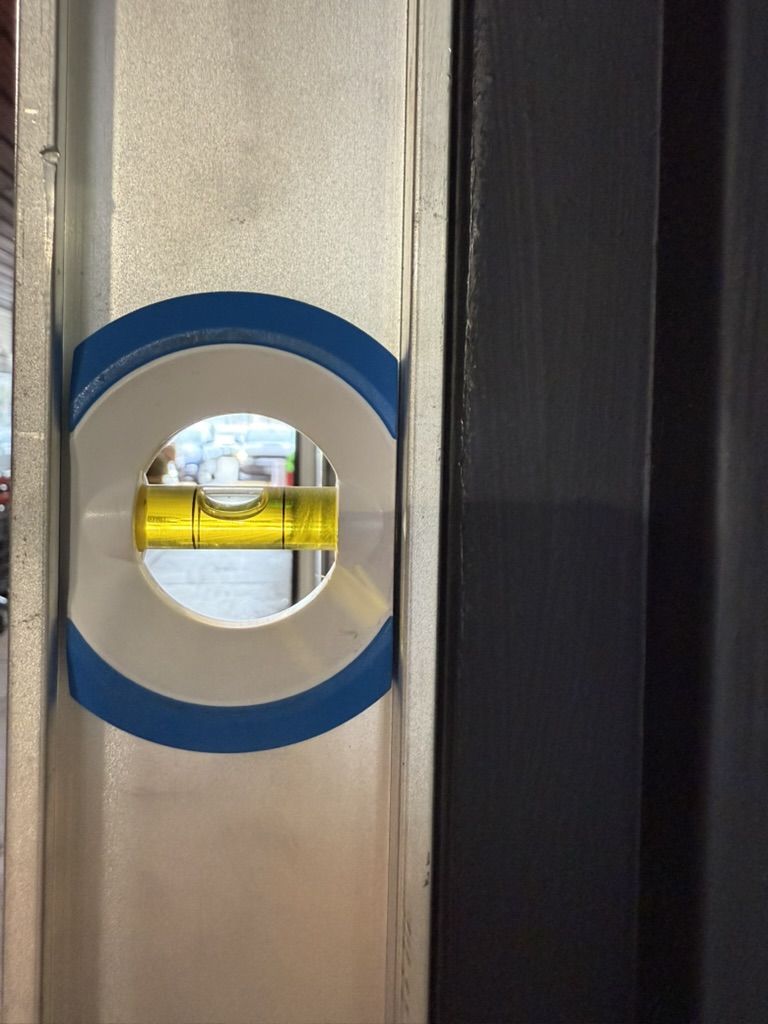
- Tighten the hinge screws. A loose top hinge lets the door sag toward the latch side. Tighten every screw. If one keeps spinning, the hole is stripped, and a longer screw that reaches the wood framing behind the jamb will usually pull the door back up.
- Check the strike plate. Close the door slowly and watch where the latch and bolt meet the plate. Marks above or below the opening mean the door and the strike no longer line up.
- Clear the threshold. Chip away ice and salt build-up from the threshold and the bottom of the door.
- Use the right lubricant. If the lock feels stiff, use a lubricant made for locks. Household oil attracts dirt and gums up in the cold.
What not to do: don’t file the strike opening into a wide slot, and don’t pull off the weatherstripping. A widened strike lets the door rattle and makes it easier to force open, and missing weatherstripping lets cold air in all winter.
When to call a door repair technician
- The door still sags after you tighten the screws.
- The frame is cracked or split, or the door was forced open.
- The door rubs on the frame or the floor.
- You have to slam the door to lock it. That wears out the latch and the lock quickly.
- The door won’t lock at all. A door that can’t be locked overnight is an emergency, and we’re available 24/7 (emergency door repair).
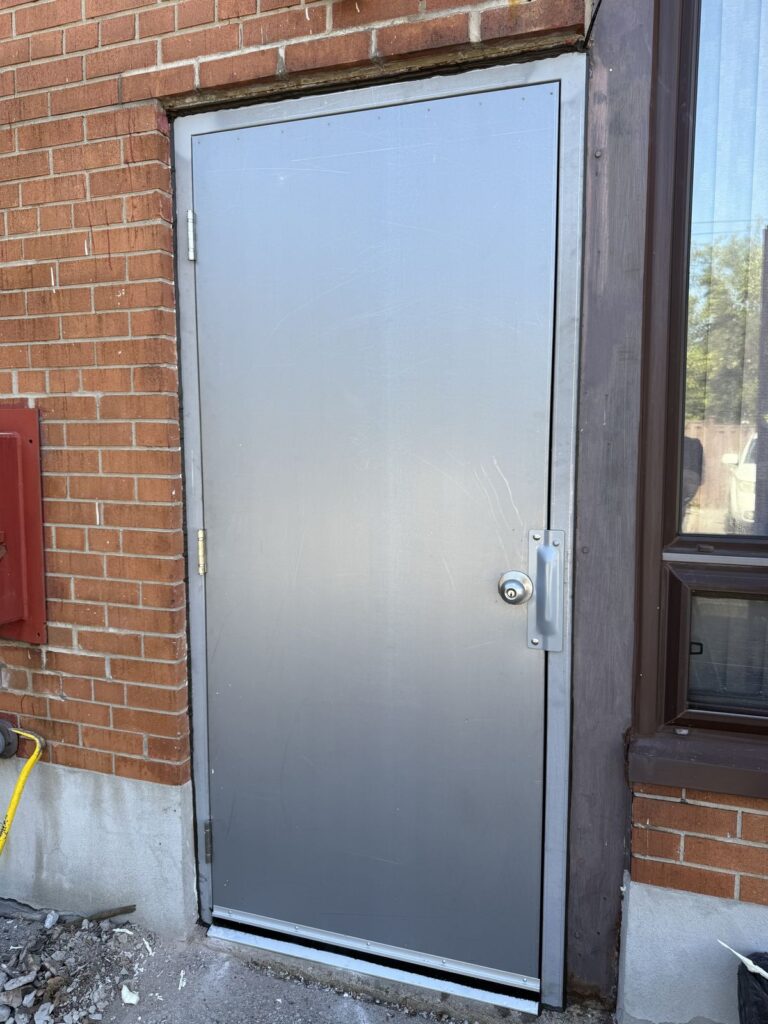
A technician can reset or shim the hinges, move or adjust the strike plate, adjust the latch, replace worn weatherstripping, or repair the frame. Many of these fixes fit within the first hour of a service call. See residential door repair and door hardware repair for what we fix.
Prevent it next winter
- Check and tighten the hinge screws every fall.
- Keep the threshold clear of ice and salt.
- Replace weatherstripping that’s flattened or torn.
- Lubricate your locks once a year with a lock lubricant.
- Deal with a door that’s getting harder to lock before it stops locking.
Frequently asked questions
Why won’t my door lock when it’s cold outside?
Usually the door or the frame has shifted, so the bolt no longer lines up with the strike plate. Cold also makes weatherstripping stiffer and the grease inside the lock thicker.
Can I fix a door that won’t latch myself?
Often, yes. Tightening the hinge screws and clearing the threshold solves many cases. If the door still won’t latch, the strike plate or hinges need adjusting, or the frame needs repair.
Should I replace the lock if my door won’t lock?
Not usually. If the bolt turns freely while the door is open, the lock is fine and the door needs adjusting. A new lock won’t fix a door that has moved.
How much does it cost to fix a door that won’t latch?
At Go Locksmith And Doors, the service call + 1st hour of labour starts from $175. Parts such as a new strike plate, longer hinge screws or weatherstripping are extra.
Door won’t lock? Call 647-955-6055, 24/7. Service call + 1st hour of labour starts from $175.